Newspeak Dictionary
The Newspeak Dictionary is the official lexicon of Oceania and the most concrete embodiment of Ingsoc’s belief that language can be made to control thought. In 1984 it exists in a provisional state — the Ninth and Tenth Editions currently in use, the Eleventh Edition under compilation — while the Party works toward a perfected language in which a heretical thought will be literally unthinkable. It is at once a bureaucrat’s desk tool, a symbol of total linguistic authority, a pretext for conspiracy, and, in one memorable scene, a missile thrown at the projected face of Emmanuel Goldstein during the Two Minutes Hate. The principles that govern it are set out in the appendix “The Principles of Newspeak”, which treats the dictionary not as a record of usage but as an engine for abolishing unwanted meanings.
Design and Purpose
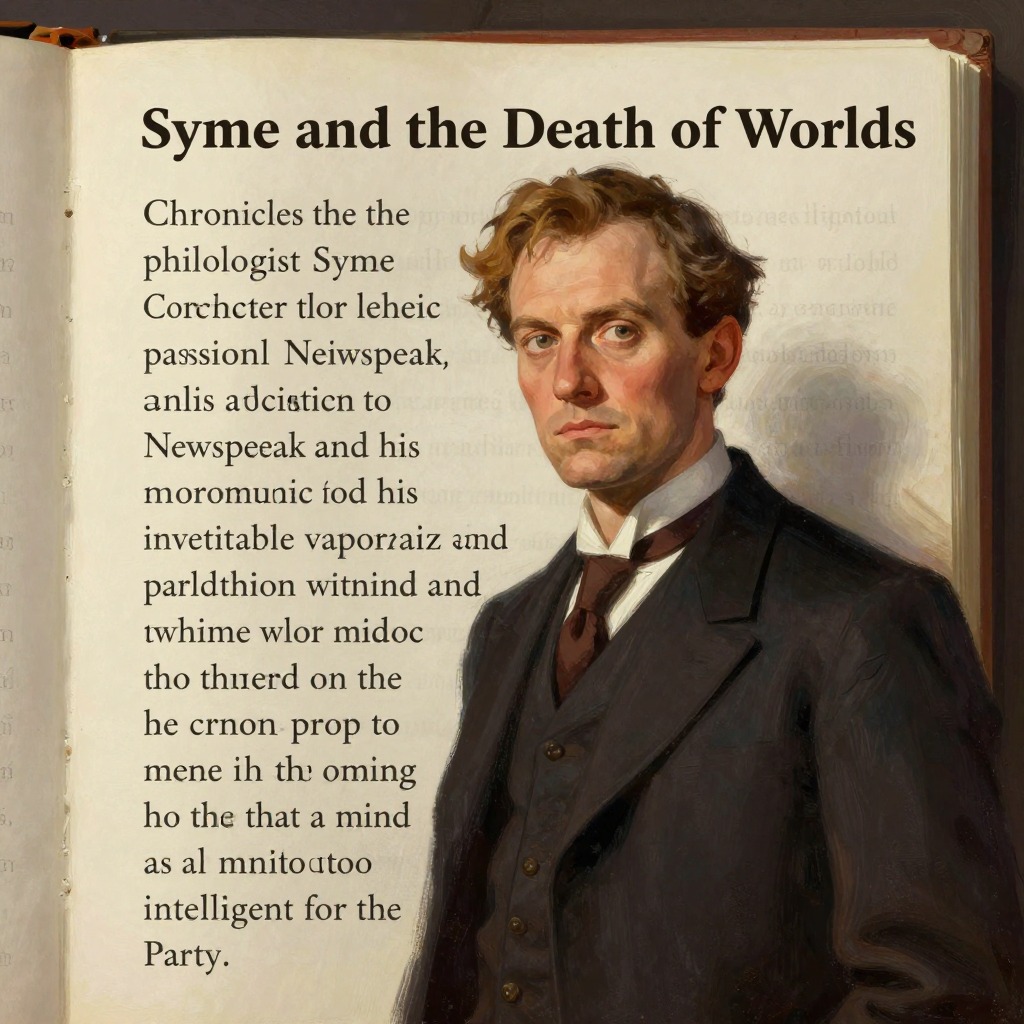
Newspeak was the official language of Oceania, devised to meet the ideological needs of Ingsoc, or English Socialism. In 1984 no one yet used it as a sole means of communication; even the leading articles of the Times, written entirely in Newspeak, were a tour de force possible only for a specialist. The dictionary in use was therefore a provisional instrument, embodied in the Ninth and Tenth Editions, and it was expected that Newspeak would finally supersede Oldspeak, or Standard English, by about 2050. The purpose of the dictionary was not to extend expression but to diminish it. Its vocabulary was constructed to give exact expression to every meaning a Party member could properly wish to express while excluding all others, partly by inventing new words, but chiefly by eliminating undesirable ones and stripping the survivors of unorthodox or secondary meanings. The word free, for instance, survived only in statements such as “This dog is free from lice” or “This field is free from weeds”; it could no longer mean “politically free” or “intellectually free”, because those concepts no longer existed even as concepts. As Syme, a specialist in Newspeak, explains, “the whole aim of Newspeak is to narrow the range of thought. In the end we shall make thoughtcrime literally impossible, because there will be no words in which to express it.”
Editions and Daily Use
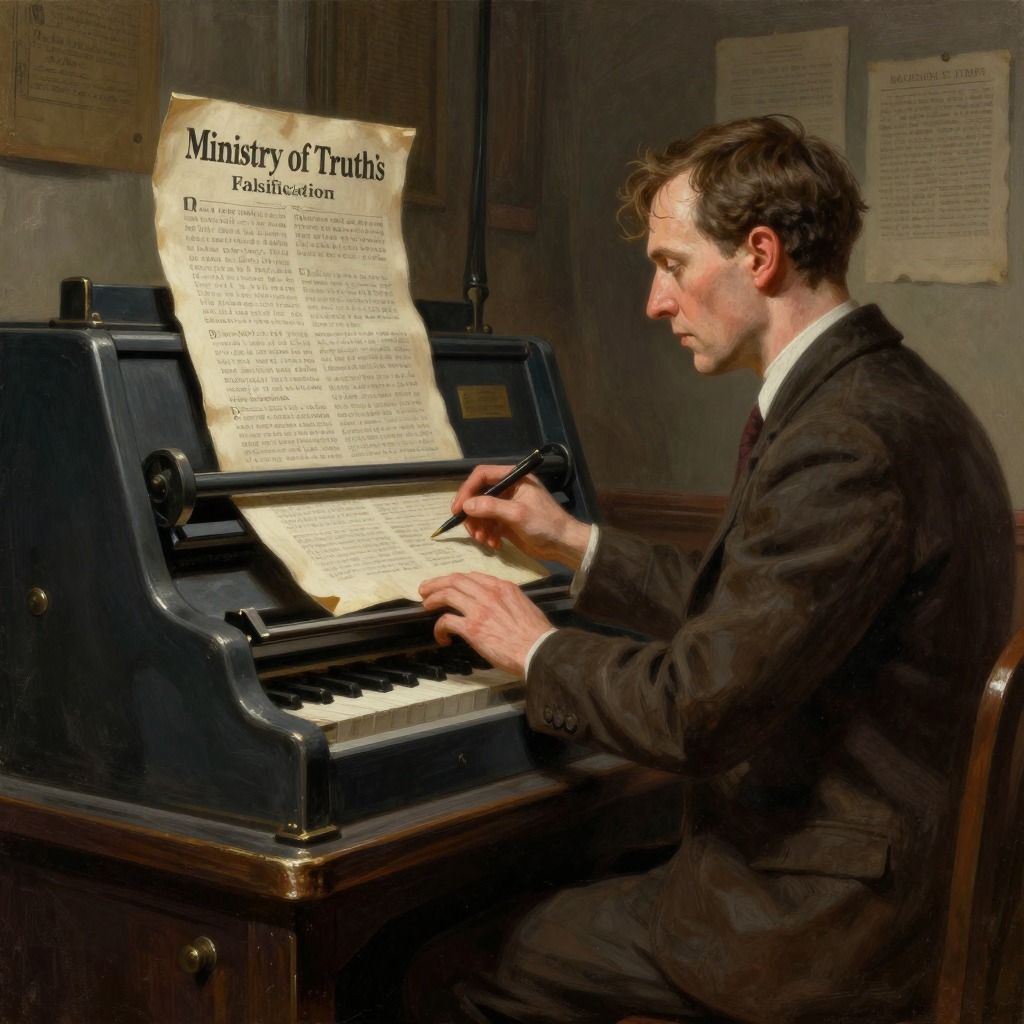
The Ninth and Tenth Editions were the working versions of 1984; the Eleventh Edition, on which Syme labours in the Research Department, was to be the definitive one, containing no word that would become obsolete before 2050. Syme describes the enterprise as one of destruction as much as creation: “We’re destroying words – scores of them, hundreds of them, every day”, and concludes that “The Revolution will be complete when the language is perfect. Newspeak is Ingsoc and Ingsoc is Newspeak.” Winston Smith, working in the Records Department of the Ministry of Truth, keeps a copy of the dictionary on his cubicle shelf and takes it down after the Two Minutes Hate before settling to his main job of the morning; he later tells O’Brien that the Records Department is still using the ninth edition. He is trusted with the rectification of Times leading articles written entirely in Newspeak, delicate pieces of forgery that require knowing what the Party wants said. The dictionary is thus not an inert reference book but an instrument of the falsification machine, the authority against which official language is checked and the source from which it is issued.
A Pretext for the Conspiracy
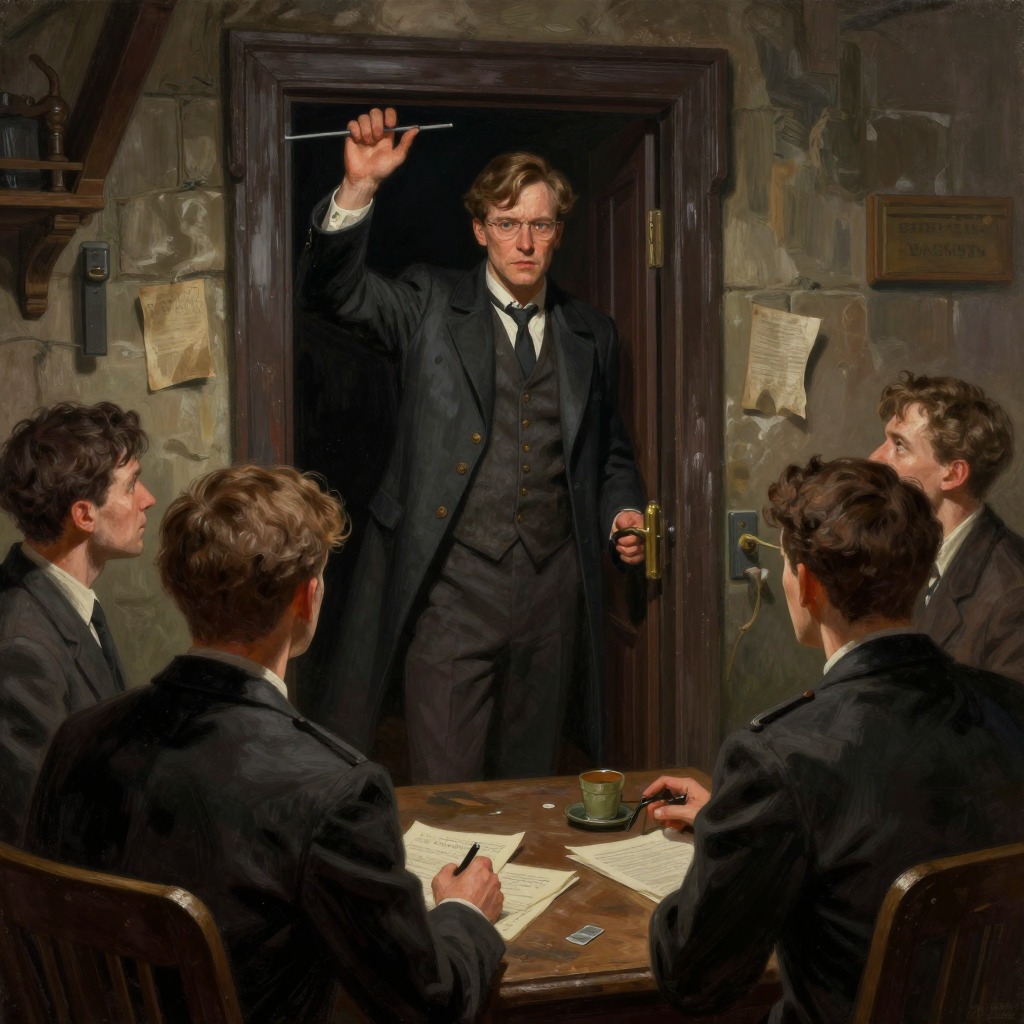
The dictionary also serves as cover for contact with the underground. In a corridor of the Ministry, O’Brien remarks that Winston has used two words which have become obsolete in a Newspeak article in the Times, and offers to lend him an advance copy of the Tenth Edition, which has been circulated to a few people. Beneath a telescreen, in full view of anyone watching, he scribbles his address in a small leather-covered notebook with a gold ink-pencil, tears out the page, and says that if he is not at home his servant will give Winston the dictionary. Winston understands the real message: the encounter has been arranged to let him know where O’Brien lives, and the conspiracy he has dreamed of is real. The most orthodox object in the Ministry becomes the pretext by which a thought-criminal is drawn toward the Brotherhood.
A Weapon as well as a Lexicon
The dictionary’s physical bulk is made visible in the Two Minutes Hate. As hatred of Emmanuel Goldstein rises to a frenzy, the dark-haired girl from the Fiction Department, whom Winston will later know as Julia, begins crying out “Swine! Swine! Swine!”, picks up a heavy Newspeak dictionary and flings it at the telescreen. It strikes Goldstein’s nose and bounces off; the voice continues inexorably. Goldstein is the “primal traitor”, the Enemy of the People whose face appears in every Hate programme, and the dictionary is the Party’s own instrument of definition; hurling it at his image is an act of orthodox rage. Yet the same word-hoard defines Goldstein as the author of the book, the forbidden compendium of heresies that circulates only by rumour. The physical object, heavy enough to be thrown, becomes a weapon inside a ritual designed to make even rebellion express itself through Party vocabulary.
The Dictionary and the Principles of Newspeak
The appendix “The Principles of Newspeak” turns the dictionary into the central exhibit of the Party’s linguistic programme. The Newspeak vocabulary, it explains, grew smaller instead of larger every year, each reduction being a gain because the smaller the area of choice, the smaller the temptation to take thought. Words grouping themselves around liberty and equality were contained in the single word crimethink; those around objectivity and rationalism in oldthink; sexual conduct was divided between sexcrime and goodsex. The final perfection of the dictionary would sever the last link with the past: pre-revolutionary literature could not be translated into Newspeak without an ideological transformation, so that Jefferson’s words in the Declaration of Independence, “all men are created equal”, would become a panegyric on absolute government or be swallowed whole by crimethink. The dictionary thus carries the same doublethink as the Party’s slogans: it presents itself as a mere compendium of words while functioning as an instrument for abolishing the concepts those words once named.